Years
“I understand why that faster execution matters. I have spent time on the slow version.”
 Finish the Stuff
Start a project
Every part has a job.
Campus is practical guidance. Field Notes is the reading room for essays and case stories. They stay connected, but they are not the same shelf.
Start a project01 / Before the speed
The tools changed how quickly I could make something. I was unprepared for what that would do to the way my work was seen.
Read the storyThe feeling underneath it
“I understand why that faster execution matters. I have spent time on the slow version.”
“Later, I watched people use AI to produce product images in seconds.”
“Then I felt the value of that work change in someone else's eyes when AI became part of the explanation.”
“The years I spent learning it are coming with me.”
I remember the work that came before the image: the questions, the revisions, the handoff and the trust. The files that survive cannot recreate every moment. They can show how much was inside it.
I stopped designing because it hurt so badly.
Not because I’d run out of ideas. I still saw things I wanted to make better everywhere. But after years of putting myself into that work, I had begun to feel that the experience behind it no longer counted.
Before any of that, there was a bottle.
I designed the label. I chose the bottle. Then I found a talented 3D artist who could make the specific bottle and pills we needed for the product images. I had to know what we were trying to make, find the right person to help make it, and explain what the image needed to show. The artist brought skills I did not claim as my own. The finished image came out of that collaboration.
Later, I watched people use AI to produce product images in seconds.
I was shocked. I was comparing that speed with a process I knew from the inside: the label, the bottle, the artist, the work it took to arrive at an image. I could see why people would want the faster way. That did not make it any less frightening.
What the work asked of me
These SkinnyRx pieces are not the bottle from that memory. They are here because they show the part speed can make easy to miss: the constraints, choices, revisions and care that turn one image into a system.
These archived mockups are shown to discuss packaging systems and design decisions. Product wording and directions are historical artwork, not medical advice or current instructions. The archive verifies a November 2024 process sequence and a May 2025 revision family; it does not establish that one replaced the other, identify the collaborator from the remembered bottle, or prove manufactured status.
Around that period, I lost my job. I understood AI to be part of what was replacing the work I had been doing, although I cannot claim to know every reason behind that decision. What I can tell you is that I was scared.
I had heard people talk about the industry changing. This was the first time I felt it in my own life.
02 / Learning what came next
Later, an agency opportunity came through a connection with a former coworker. Someone who had worked with me had seen the value of what I could do.
I was still frightened by these tools. I was also excited about what I could do with them.
I could get an idea into a form I could actually inspect sooner. Then I could change my mind, keep a useful part, or try another approach. I had wanted to do things as a designer that now felt more possible. The same change that had frightened me was giving me a way to explore them.
When the conversation turned to my rate, I explained the opportunity as I saw it: my hourly rate could stay the same while better tools helped reduce the hours needed for some of the work. I said I was excited about AI-assisted workflows. I was describing them upfront as part of how I wanted to work.
Figma Make became part of that exploration. I poured myself into a long landing page. I was using assistance and still working through the page, section by section, making decisions about what to ask for and what to change.
A separate landing-page project
Felix + Fetch is not the agency page in this account. It is authentic surviving work used here to show what a still image can hold—and what it cannot explain without the source motion and the person directing it.
Then I felt the value of that work change in someone else's eyes when AI became part of the explanation.
From my side, it felt as though the question had become whether they could have asked a tool to make a page themselves. I wanted to talk about the direction inside the page: what someone needed to understand, what the choices were doing, and what still needed work. I felt that conversation getting smaller just as the tool became the explanation for the whole thing.
What was still inside the work
First-party editorial rendering of the distinctions in the surrounding canonical text. It is not a workplace reconstruction, a quotation from another person or evidence of what another person intended.
The conversation got smaller. The work did not.
There were also specific criticisms of the design and its readiness for implementation. I had made choices that departed from the supplied direction, and I had left some structural work for a later pass. Those choices were open to criticism. It would be unfair to describe the disagreement as though the only criticism was that I had used AI.
I cannot tell you everything another person thought. I can tell you how that shift landed with me. I had been trying to bring more capability to the work. I felt that the capability had become a reason to discount me.
03 / What it cost
This caused a huge shift in how I saw myself. I had been a maker and a creator for over a decade, going back to childhood and finding ways to solve problems. Now I was trying to understand where that part of me belonged. I wanted to learn what these tools could do, but I also needed to find my place in work that was changing around me.
I stopped designing after that. I need to say it plainly because an argument about the value of creative work can make this sound much more distant than it was.
I had been celebrated for my work for years. People had trusted me with substantial projects. I had put myself into understanding what they needed and making the pieces work together. Now I was struggling with the feeling that the experience behind the work no longer counted. Something I had been proud to give had become painful to keep giving.
The job loss had already frightened me. I had tried to respond by learning. I had told someone openly that I was excited about the new ways I could work. Then I felt dismissed in the very place where I had been trying to adapt.
The archive remained
Four pieces that were still here when I was ready to look again. Together they show a practice that lasted longer than one tool—or one argument about it.
What the argument interrupted
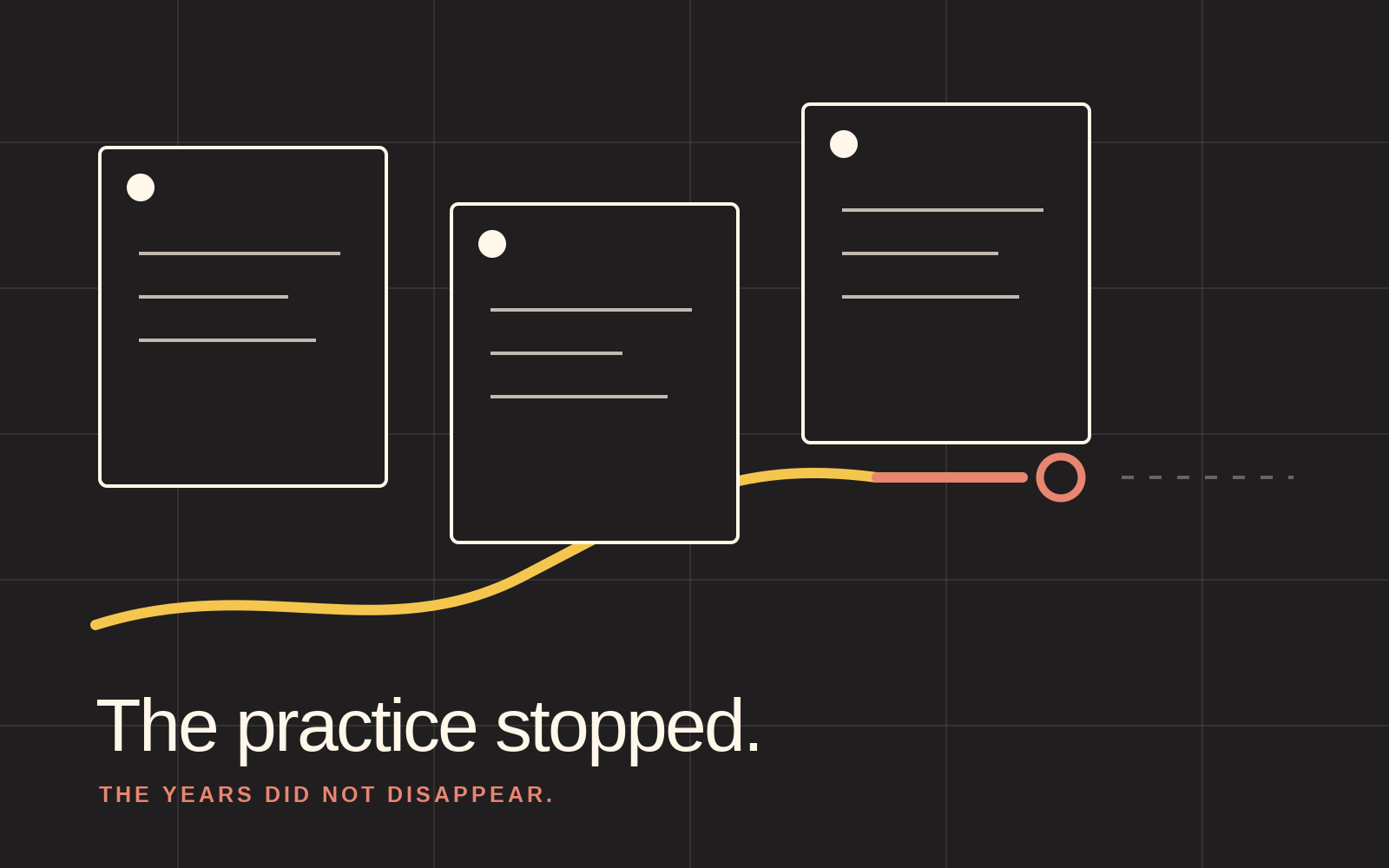
The names did not vanish. The practice stopped.
This is an illustration of the surrounding first-person account, not a photograph of the workplace or a measured timeline.
“Maybe AI sped it up, but clearly there’s value here that was not given to me.”
That is how I described the hurt. I wanted someone to look closely enough to recognize the contribution. The tool had helped me make the work. I had brought something to directing it, too.
I can make a choice that needs correcting and still have contributed something worth recognizing. I want the work assessed honestly. I want to be honest about what that experience did to me, too.
04 / The years of making
I remember being in second grade, looking up “how to make a free website” on a Motorola flip phone. Then I built websites. Many of them. I had them for my first businesses, even back then.
One of those early businesses was DJ Uplift. My grandpa took me to get a custom shirt. Despite the name, I didn't touch the music. I worked the lighting consoles for parties and church productions.
That distinction makes me smile now. The name said DJ. What I was making was an experience with light.
Later, in a school design club, I became good enough with the pen tool to help classmates cut images out of their backgrounds. Hair was a particular challenge. I remember spending around forty minutes on a single image.
I don't have any hair, but I remember how much work it could take to cut around somebody else's.
That was skilled labor, and it took billable time when I was doing it professionally. If a tool could handle more of that removal, some of the labor could shrink. I would still need to decide which image belonged in the design, how to use it, and whether the result was good enough.
I understand why that faster execution matters. I have spent time on the slow version. What I want to make visible is the direction that remains when part of the execution becomes easier.
I also collected pieces of websites and interfaces: PNGs, clippings, a header, a button treatment, a section whose arrangement caught my attention. I would study them and ask why they worked.
Different by Design, or DBD, was the name of my first design studio.
A collection of references still leaves you with decisions to make. What belongs in this project? What only worked in the original context? What is attractive but gets in the way? What does someone need to understand before they can take the next step?
Before the speed
Editorial timeline drawn only from the surrounding canonical account; it does not assign exact dates or prove the full history of each project.
Different by Design · 2012
The Photoshop file still shows the layers, choices and unfinished edges behind the finished composition.
Actual DBD tutorial excerpt associated with Different by Design; the tutorial existed by May 9, 2012. It is not the pen-tool anecdote, bottle work, proof of sole authorship, client approval or a shipped result. It is shown as surviving process evidence.
05 / What direction means
The bottle gave me a more practical education in that distinction. I could design the label and choose the bottle, but I needed a 3D artist to make the specific bottle and pills for the images. Finding that person and explaining what we needed were part of getting the work made. So was knowing which skills were theirs.
Now a tool may let me explore an image much sooner. I still have to compare what it made with what I intended. Does it show the right thing? What would I need to correct before I could use it? Speed gives me an earlier version to judge; it cannot tell me that my judgment was good.
I want to be able to show that distinction in the work itself. Here is the part I directed. Here is the part a collaborator made. Here is what a tool helped produce. Here is the decision I got wrong and changed. A finished image alone doesn't explain any of that.
A finished image is not a credit record
Source gap: the exact bottle image from this memory has not been recovered here. The Felix work below is a separate project and is labeled that way.
The talent is visible in the systems
Actual archived mockups, shown large enough to inspect the hierarchy, color and format decisions—not as shipped-product or performance evidence.
Oral bottle, carton presentation and injectable treatment remain related without becoming identical.
Focus, Sleep and Turmeric use one patterned system with clearly differentiated color and hierarchy.
The teal-and-white system moves from a gummy bottle to cream and oil formats.
Archive custody and last-modifier metadata support hands-on production involvement; they do not independently prove sole authorship of base 3D models, manufacture, shipment, client approval or any label claim. These archived supplement and CBD mockups are shown as design work; label statements are not endorsed or independently verified here.
A separate project, shown honestly
Felix + Fetch is not the bottle from the story. It is a different project where the source motion still survives.
Actual Felix + Fetch 9.28-second silent product composite. It is a known separate project, not the article's unnamed bottle, pills or 3D-collaborator memory. It is not an AI comparison or proof of sole authorship, shipment, outcome or measured improvement. Client, stock and model contributions remain distinct from Ely's design direction.
That judgment can be learned. I spent years learning it, and I am still learning. Those years affect what I notice and what I ask for next.
06 / Returning to the work
I would like to put older work beside newer work and walk through it. Here is what I made by hand. Here is where assistance changed the execution. Here is the direction I chose, and here is a version I decided needed another pass.
SkinnyRx · archived 2024 and 2025 work
An earlier carton study and a later product range make the continuing hierarchy, color and packaging decisions visible.
Actual recovered SkinnyRx portfolio assets from 2024 and 2025. They show design development across archived work; they are not the unnamed bottle-and-collaborator memory and do not prove sole authorship of base mockups, manufacture, shipment, client approval or product outcomes.
The comparison underneath the comparison
These questions follow the distinctions in the paragraph that comes next. The archived comparison makes part of the changing system visible without claiming a complete decision record.
The comparison I want goes deeper than how long each image or page took to produce. I want to show why something moved, why an attractive idea came out, or why a piece of information needed to come first. Someone looking at the finished page should be able to ask what I contributed and get a specific answer.
I want that account to include assistance without letting assistance swallow the rest of the story. Crediting a collaborator never meant I had contributed nothing. Being clear about an AI tool should also help someone understand what each part of the process contributed.
That is part of what I want to bring into Finish the Stuff now: work people can inspect, question, and use. Some of it is taking shape. Some of it still needs testing. I want the process to make those differences visible.
Look again
Each pair holds one small turn: a constraint becoming a package, one system carrying two purposes, an identity moving into another format.
These are bounded comparisons from the recovered portfolio. They do not claim outcomes, replacement history or sole authorship of every mockup component.
A print constraint becomes an applied package.
One visual grammar separates focus from sleep.
The same system moves from gummies to oil.
I am still rebuilding. The hurt did not automatically become a lesson that made everything better. I stopped doing something I cared about, and I do not want to rush past that just to give this story a satisfying ending.
But I still see things I want to make better. The questions are specific: Why is this difficult to use? What does someone need to know here? How could these pieces work together? Those are the questions I want to keep following into the work.
I want to use the speed to see more of an idea while I still have time to change it. I want to look at the result and ask whether it does what we need. And when I show it to someone, I want to be able to explain how we got there.
Returning to the work
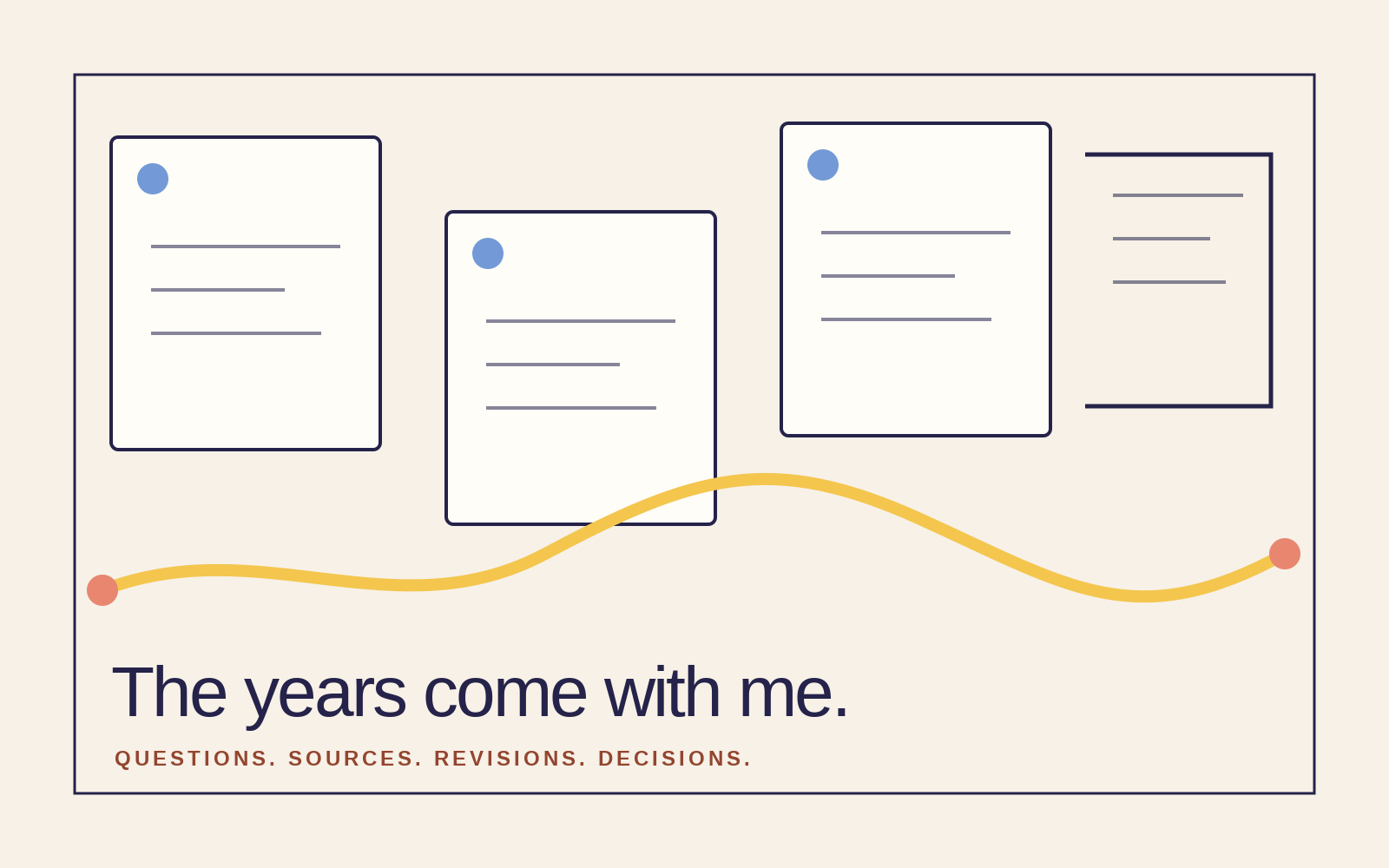
Not a neat resolution. A return to questions, sources, revisions and decisions that can be inspected.
That is the work I am trying to return to. The years I spent learning it are coming with me.
07 / What I’m making now · separate postscript
I want to put some of that work beside this story. Here are a few pieces I’m developing through Finish the Stuff, and what each one means to me.
In Helping Our Keiki Start Hula Shouldn’t Begin With Guesswork, I follow a parent trying to understand how their child could begin. The example is fictional; each hālau sets its own process. The practical question is real: have we given someone enough information to ask about what matters to them? The article and its visual reading experience are in private review. They are not a live enrollment service.
Some of my older landing pages still make me proud. I want to revisit the references, revisions and motion behind them, then show how I would approach parts of that work with today’s tools. That comparison is being developed privately. The original source, my recollection and any modern recreation need to remain clearly distinguished; client material needs permission before it can be shown publicly.
Three places for the experience to go
These are different kinds of work, but each gives me somewhere to put that experience: into a question someone can ask, an idea they can try, or a decision they can inspect.
You can explore more of my work at Finish the Stuff and Dewdat.
For more writing, visit my Medium profile. You can also read Keep Local Money in Local Hands or listen to its published audio article on Spotify. That recording accompanies Keep Local Money in Local Hands, not this essay.
About the author
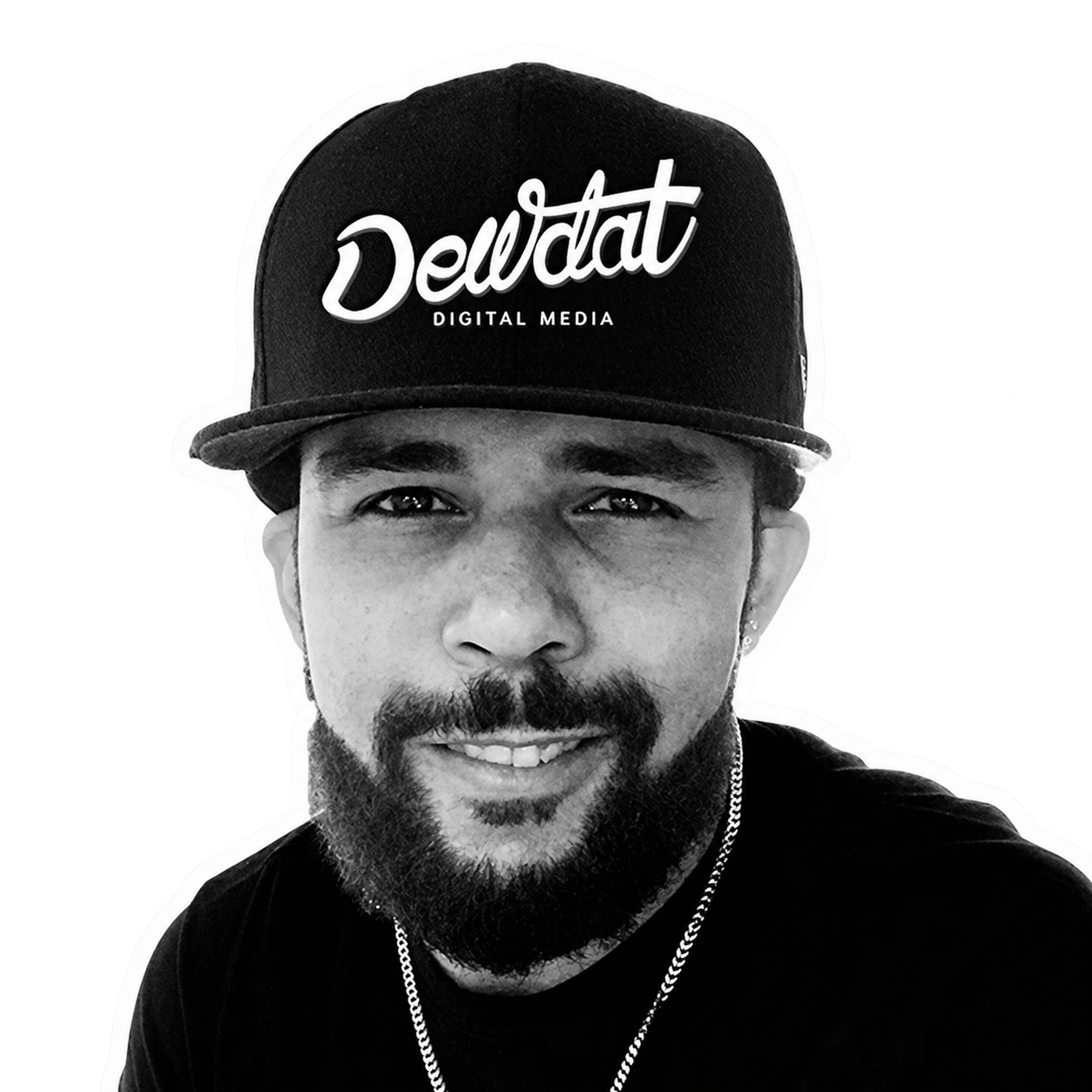
Elyakim is a Native Hawaiian and Black digital product and experience designer serving Hawaiʻi. He leads Finish the Stuff and helps businesses understand and control the technology they depend on.
See Ely’s work and articles