


Listen to the radio edition 9:26
Adapted for audio; not a word-for-word reading of this page.
Read the radio transcript
I want that idea to become something a business owner can act on. Something more specific than being told to shop local and hope the money finds its way back to the community.
I’m a Native Hawaiian and Black digital product and experience designer serving Hawaiʻi. My starting point is the technology a business uses every day: its website, booking system, online store, payment tools, and customer communications.
Those choices affect what the business pays, what it can change, and how much freedom it has when a relationship stops working.
Clients have come to me because they were stuck. They had paid for systems they could not update without asking someone else. Prices had gone up unexpectedly. Platform changes had broken parts of the work, and when something stopped working, responsibility was unclear. Helping long-stalled work move forward is central to my practice: finding the thread, clarifying the decisions and helping the project move without throwing everything away. That experience also shapes how I think about ownership. A system should leave the owner able to continue, not send them back into the same stuckness when a relationship changes.
Before commissioning another website, I’d ask a simple question: when the work is finished, what will the owner actually control?
Start with the accounts
Imagine a business that has paid for a new website. The site looks good. Orders come in. But the domain is registered through the designer’s personal account, the owner cannot access the billing, and nobody has explained how to move the site.
That is a hypothetical, but the questions it raises belong in every project.
Who can renew the domain? Who can change the payment details? Who receives the recovery email? If the designer is unavailable, can someone else keep the business running?
The business should have appropriate ownership and administrator access to its essential accounts. A provider can receive the permissions needed to do the work without becoming the only person who can unlock it.
Use individual logins where available, enable multifactor authentication, and document recovery access. Avoid making one shared password the entire continuity plan.
These details deserve a place beside the design presentation. A beautiful homepage cannot fix an account the owner cannot recover.
The business stays in the middle.
Ownership is the practical ability to renew, recover, export, and move—without waiting for the one person who built the system.
 Ownercan continue
Kuleana, to me, holds rights and responsibilities together. As someone close to technology, I feel a responsibility to bring that knowledge home and make it useful to my people. In this work, that means helping Hawaiʻi businesses understand who controls their websites, what they are paying for, and whether they can take their data with them. Keeping local money in local hands is not only about where the invoice goes. It is about leaving people with more control, more understanding, and more ability to make the next decision for themselves.
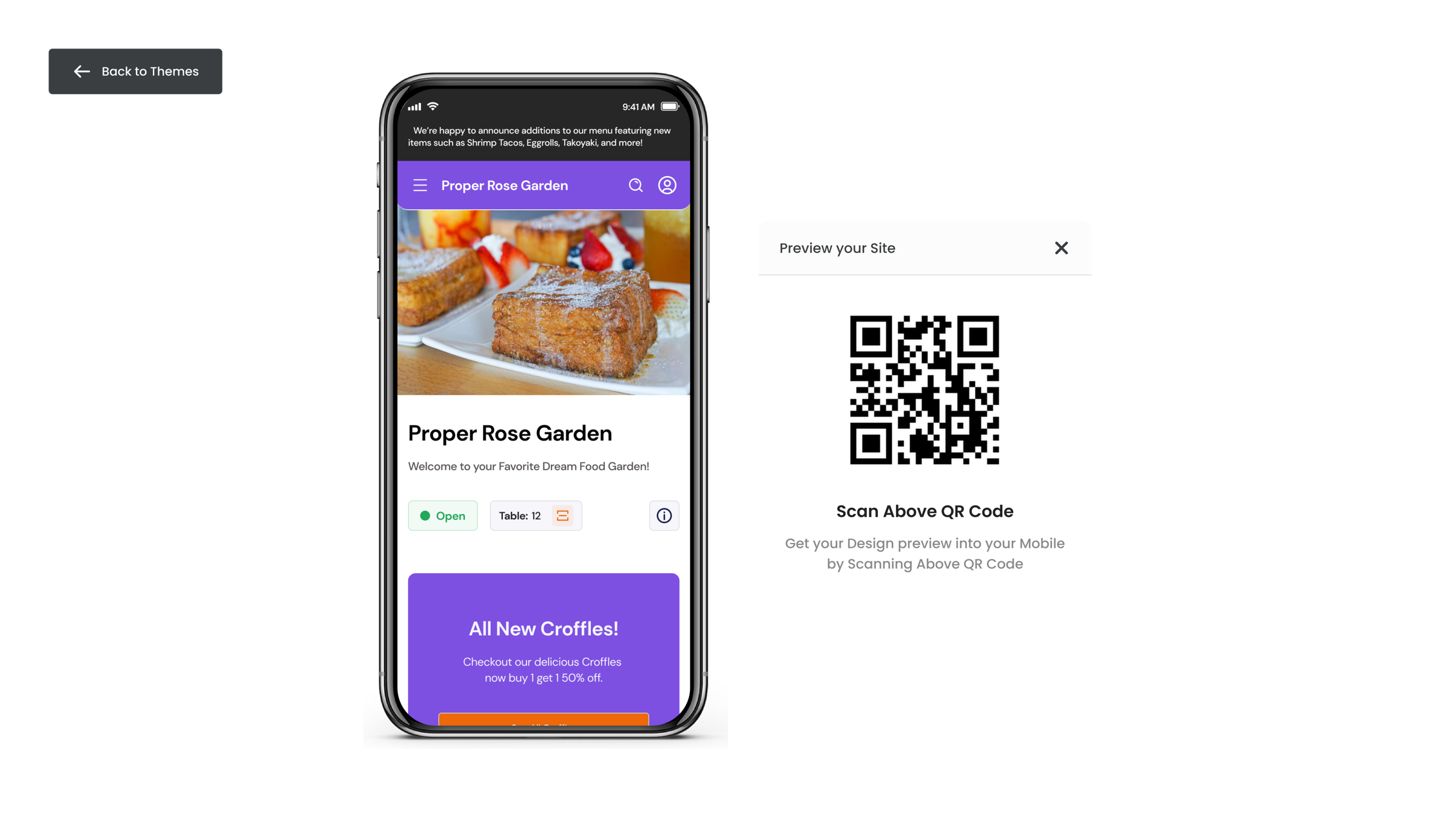
Restaurants make the issue concrete for me. I have worked on restaurant templates and an older loyalty interface concept. A guest could see points, status and rewards. An owner still needs a different set of answers: Who controls the essential accounts? What information can the business export? What survives a vendor change? The screen and the system are both part of the design. A useful handoff should make those answers clear.
Know what each sale costs
Keeping more money in a business begins with understanding where it goes.
A marketplace may bring customers who would never have found you. A delivery service may handle work you cannot reasonably take on. Paying for those things can make sense.
The useful question is whether the cost matches the value received.
DoorDash, for example, advertises U.S. marketplace delivery commissions of 15%, 25%, or 30%, depending on the plan. Its direct Online Ordering product is commission-free, with payment-processing fees still applying. Those are different services with different conditions. DoorDash pricing.
For illustration, a 25% commission on a $40 order subtotal is $10 before the restaurant’s other costs. That math alone cannot tell us whether the order was worthwhile. We would also need to know the food and labor costs, whether the order was additional business, and what it would cost to acquire and fulfill it another way.
Watch one $40 order split.
The percentage is easy to calculate. Whether the channel earns its place still depends on the business’s real costs and context.
The arithmetic is exact for this stated example. It does not establish profit, value, or whether the order was incremental.
A direct channel deserves that same scrutiny. Someone still pays for the software, processing, maintenance, marketing, and delivery when needed.
Compare actual invoices and margins. Give returning customers a clear, usable direct option where it makes operational sense. Keep the channels that earn their place.
Test whether your information can move
“You can export your data” sounds reassuring. Ask to see it happen.
Can the owner download products, bookings, orders, and the customer information they are permitted to use? What format arrives? Could another provider work with it? What is missing?
Shopify’s documentation makes the distinction concrete. It supports CSV exports for several kinds of store information, including products, customers, and orders. Its store-duplication guidance also identifies limitations: visitor traffic data cannot be transferred, and importing orders requires tools beyond the normal Shopify admin. Shopify backup and duplication guidance.
Make the files cross the room.
Products, customers, and orders can become usable copies. Other context may stay behind or need a different tool.
Test it.Can another provider use it?
An export gives you something to work with. A tested recovery or migration plan tells you what you can actually do with it.
Customer information also deserves care. Limit access, secure backups, and respect the purposes customers agreed to. More control should come with better stewardship.
Put the handoff in the agreement
Before work begins, ask for a plain-language account of what the business receives.
Which custom files belong to the business? Which assets are licensed? What stays inside a third-party platform? What happens to the domain, content, and integrations if the maintenance agreement ends?
Ask what a future move would require and what assistance would cost. Nobody can promise a frictionless migration between every system. They can explain the likely constraints before you become dependent on them.
Training matters, too. An owner or designated employee should be able to perform the ordinary tasks the project was meant to support. Changing an opening time should not require a scavenger hunt through old messages.
Before everyone calls the project finished.
- Access: the right people can sign in and recover the account.
- Ownership: custom work, licensed assets, and platform limits are named.
- Movement: exports and the likely path to another provider are understood.
- Operation: someone can perform the ordinary updates the work requires.
- Exit: the agreement says what happens when maintenance ends.
Apply the standard locally, too
A Hawaiʻi address does not answer every ownership question. Locally based, locally owned, and Native Hawaiian-owned describe different things. We should be specific about which one we mean.
The same care belongs in technology decisions. A local provider can create unnecessary dependence. A provider based elsewhere can offer reliable service and a straightforward exit.
One address cannot answer every question.
Specific language makes it possible to ask the next useful questions: who controls the work, who benefits, and what capacity stays here?
I want local businesses and local practitioners to build strong relationships that are worth continuing. Clear access, fair terms, useful skills, and dependable work give those relationships a better foundation.
We can use global infrastructure while asking where the payments go, who benefits from the work, and what capacity remains here when a project ends. Every fee is not automatically a loss to Hawaiʻi. Every local invoice is not automatically evidence of community benefit.
A useful place to begin this week
Set aside an hour with whoever manages your website.
- The essential accounts and who controls them.
- The monthly charges and per-transaction costs.
- What you can export and what you cannot.
- How access is recovered if someone becomes unavailable.
- What you receive, and what you owe, when the relationship ends.
Then choose one gap to close. Move a critical account into the business’s control. Test an export. Clarify a license. Teach someone how to update the site.
Those are small decisions with consequences that last beyond launch day.
For the people designing these systems, including me, ownership belongs in the definition of good work. The business should understand what it has bought and have the practical ability to use it, maintain it, and make its next choice.
That is where I want to begin with keeping local money in local hands.

Elyakim Samuel
Sources
Commission examples and platform limits were rechecked against the linked DoorDash and Shopify documentation on October 25, 2026.